Beef Tallow Benefits for Skin: What the Science Actually Shows

The short answer: Beef tallow benefits skin because its fatty acid profile — predominantly oleic, palmitic, and stearic acid — closely mirrors the composition of human sebum. That structural similarity allows it to absorb into skin rather than sit on top of it, delivering vitamins A, D, E, and K directly to the barrier layer. The result is deep hydration, improved barrier function, and reduced inflammation without the buildup pattern of synthetic moisturizers.
Beef tallow has been used in skincare for centuries. It fell out of fashion when synthetic moisturizers became cheap to produce, but it’s back — and the people driving the resurgence aren’t just ancestral health influencers. The published research on rendered animal fat biocompatibility supports the core claims. Here’s what the evidence actually says about beef tallow benefits for skin, and what it doesn’t say.
The Fatty Acid Case for Beef Tallow
Skin moisturization is largely lipid chemistry. Your skin produces sebum — a mix of fatty acids, wax esters, and squalene — that naturally conditions the surface and maintains the barrier. Most synthetic moisturizers try to replicate this with a combination of humectants (glycerin, hyaluronic acid) and emollients (silicones, mineral oil). They work, but they don’t match the composition of what your skin already makes.
Beef tallow’s fatty acid profile is unusually close to human sebum:
| Fatty Acid | % in Tallow | % in Human Sebum | Skin benefit |
|---|---|---|---|
| Oleic acid (C18:1) | ~43% | ~25% | Penetrates deeply; improves barrier permeability |
| Palmitic acid (C16:0) | ~26% | ~22% | Seals the barrier; protective and softening |
| Stearic acid (C18:0) | ~14% | ~10% | Repairs barrier; reduces transepidermal water loss |
| Palmitoleic acid (C16:1) | ~3% | ~3% | Antimicrobial; supports skin microbiome balance |
| Vitamins A, D, E, K | present (fat-soluble) | not synthesized in sebum | Cellular turnover, barrier repair, antioxidant protection |
Grass-fed tallow contains significantly higher levels of fat-soluble vitamins and conjugated linoleic acid (CLA) than conventionally raised sources. The sourcing matters for the nutrient density of the final product.
Beef Tallow Benefits for Skin — What It Actually Does
Deep moisturization without buildup. Tallow’s sebum-like profile allows it to absorb into skin rather than coat the surface. Silicone-based moisturizers work by coating — effective for immediate softness and shine, but they accumulate on the barrier over time and require periodic clarifying. Tallow doesn’t have the same buildup pattern because skin recognizes its fatty acid composition and integrates it into the barrier rather than sitting on top.
Barrier repair. The stearic and palmitic acid content in tallow specifically supports the intercellular lipid matrix — the “mortar” between skin cells that controls moisture loss. A compromised barrier leads to dryness, sensitivity, and inflammation. Tallow helps rebuild it using the same lipid types the barrier is already made of.
Reduced inflammation. Palmitoleic acid has documented antimicrobial and anti-inflammatory activity. Vitamins A and D in grass-fed tallow support cellular turnover and immune regulation at the skin level. People with eczema, rosacea, and chronic sensitivity often respond well to tallow specifically because these skin conditions involve barrier dysfunction and inflammation — which tallow addresses at the root rather than masking with fragrance and occlusive agents.
Fat-soluble vitamins delivered in a bioavailable carrier. Vitamin A supports cell turnover and collagen production. Vitamin D regulates inflammatory response. Vitamin E is an antioxidant that protects against free radical damage. Vitamin K is involved in wound healing and bruising reduction. Conventional moisturizers often add synthetic versions of these vitamins — in tallow, they’re present naturally in a fat carrier that the skin absorbs efficiently.
Compatibility across skin types. Because tallow mirrors sebum composition, it tends to calibrate rather than override the skin’s own oil regulation. Oily skin users often find it counter-intuitive, but introducing a sebum-compatible oil can actually reduce the skin’s need to overproduce its own — the same principle behind oil cleansing.
Why Dermatologists Are Skeptical (And What They’re Getting Right and Wrong)
What they’re getting right: Raw beef tallow applied directly to acne-prone skin can be problematic. Tallow’s comedogenic rating sits at 2-3 on a 0-5 scale — moderate, similar to many widely used plant oils (coconut oil rates a 4). People with active breakouts should patch-test before using it on the face. The evidence base for tallow specifically is still developing — the most-cited paper is a 2022 biocompatibility study, not a large randomized controlled trial.
What they’re getting wrong: The blanket dismissal of tallow as “unhygienic” or “pore-clogging” conflates raw kitchen tallow with triple-rendered, filtered skincare-grade tallow. They’re different products. The biocompatibility research that does exist supports the sebum-similarity argument. And the clinical reality is that many patients with chronic skin conditions — particularly those who’ve cycled through conventional treatments — report significant improvement on tallow-based routines.
The balanced take: grass-fed tallow is a legitimate, well-rationalized skincare ingredient with a credible mechanism and centuries of use. Professionally formulated tallow products differ significantly from raw fat applied from a jar.
Who Benefits Most from Beef Tallow Skincare
- Dry and very dry skin — the primary use case
- Eczema and sensitive skin — barrier repair and anti-inflammatory fatty acids
- Mature skin — fat-soluble vitamins A and D support cell turnover and collagen synthesis
- People reacting to synthetic moisturizer ingredients — fragrance, parabens, preservatives, silicones
- Oily skin — sebum-compatible oils can reduce overproduction over time
Less ideal for: active, severe acne where pore-clogging is already occurring; individuals with ethical objections to animal products.
How to Use Beef Tallow on Skin
Face. Apply a pea-sized amount to damp skin after cleansing. A little goes a long way — tallow is dense and a thin layer is sufficient. Start with nighttime use to let your skin acclimate.
Body. Apply to damp skin post-shower. Works well on dry patches, elbows, heels, and any area with barrier damage.
Spot treatment. Small amounts on irritated, cracked, or inflamed areas. Effective for eczema patches, dry cuticles, and lip repair.
Key tip on sourcing: Look for grass-fed, triple-rendered tallow purified for skincare use — not raw kitchen tallow. The rendering process removes proteins that can cause irritation and impurities that contribute to odor. Skincare-grade tallow is a different product from what you’d buy at a butcher.
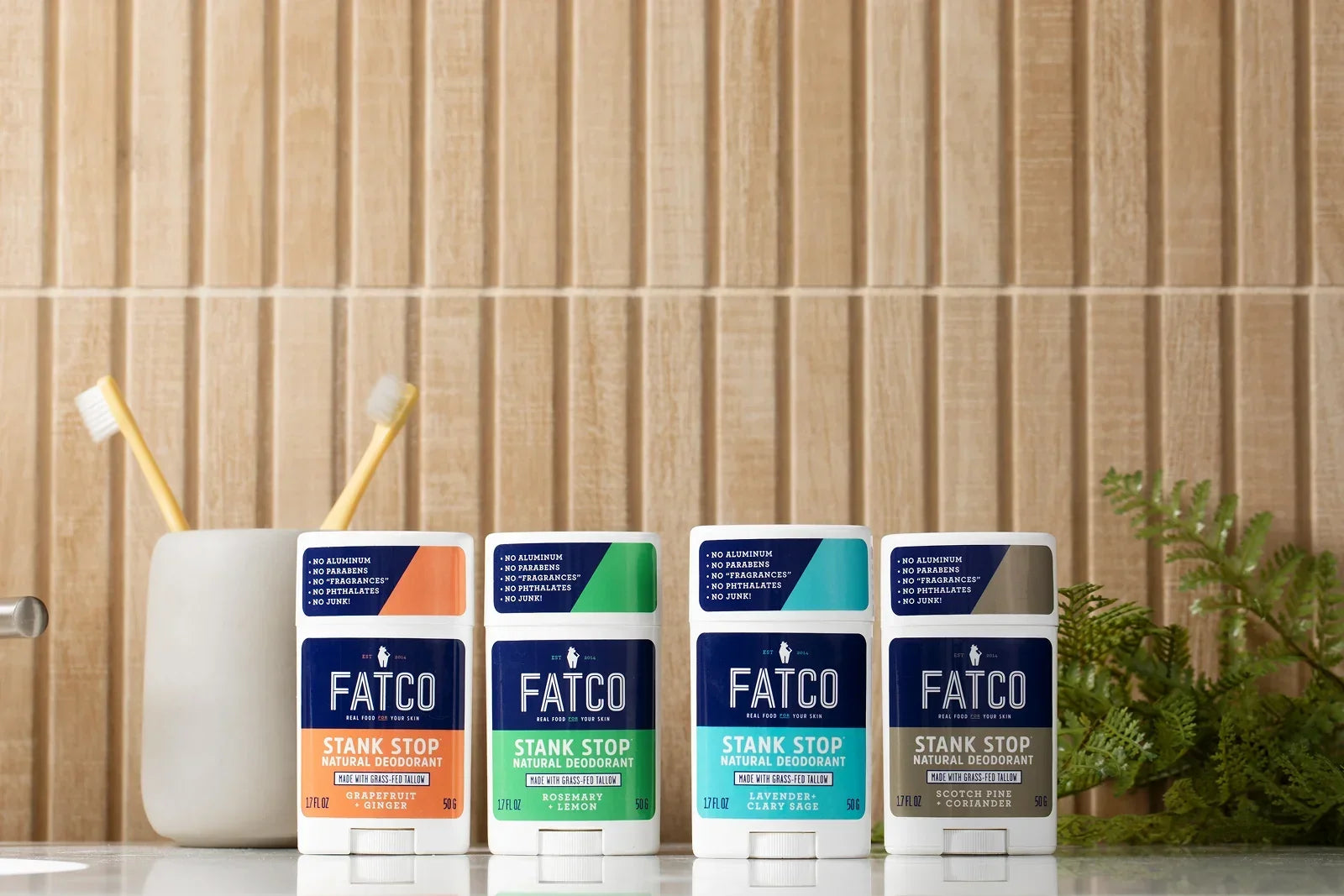
FATCO Tallow Skincare


For the full breakdown of FATCO’s tallow skincare philosophy — sourcing, formulation approach, and which product is right for your skin concern — see: The FATCO Guide to Beef Tallow for Skin.
Frequently Asked Questions
What are the benefits of beef tallow for skin?
Beef tallow benefits skin through deep moisturization, barrier repair, and reduced inflammation. Its fatty acid profile — oleic, palmitic, stearic, and palmitoleic acid — closely mirrors human sebum, allowing it to absorb into the barrier layer rather than sit on top of it. Grass-fed tallow also delivers fat-soluble vitamins A, D, E, and K, which support cellular turnover, collagen synthesis, and antioxidant protection.
Why don’t dermatologists like beef tallow?
Dermatologist skepticism stems from limited large-scale clinical trials and concerns about pore-clogging on acne-prone skin. Tallow has a moderate comedogenic rating (2-3 on a 0-5 scale). The concern is more legitimate for raw kitchen tallow than for professionally formulated, triple-rendered skincare-grade tallow.
Can I use beef tallow on my face every day?
Yes, for most skin types. Apply a pea-sized amount to damp skin after cleansing. If you have acne-prone skin, patch-test first. Most users see best results using it consistently, as the skin takes 2-4 weeks to fully acclimate.
What can beef tallow do for your skin?
Beef tallow can restore moisture to dry and barrier-compromised skin, reduce inflammation in sensitive and reactive skin types, support cell turnover through fat-soluble vitamins, repair the intercellular lipid matrix, and provide antimicrobial protection via palmitoleic acid.
Can beef tallow reverse aging?
Vitamin A supports cell turnover, which improves skin texture and reduces the appearance of fine lines over time. Vitamins D and E support barrier integrity and antioxidant protection. Stearic and palmitic acid improve barrier function. These mechanisms contribute to healthier-looking skin over consistent use through barrier repair and cellular support, not reversal of structural aging.
How long does it take for beef tallow to improve skin?
Initial hydration improvement within a few days. Barrier repair takes 2-4 weeks of consistent use. Texture and tone improvements from vitamin A activity take at least one full cell turnover cycle (28-40 days). Give it 6 weeks before drawing a conclusion.
Is beef tallow better than plant-based moisturizers for skin?
Tallow’s advantage is its sebum-similar composition, which allows for deep absorption and barrier integration that most plant oils don’t replicate as closely. For barrier-compromised, dry, or sensitive skin, tallow tends to outperform plant-based moisturizers because the mechanism is a closer match to what the skin barrier is made of.
Does beef tallow clog pores?
Skincare-grade tallow has a comedogenic rating of 2-3 out of 5 — moderate, lower than coconut oil (4) and similar to most plant seed oils. On non-acne-prone skin, properly rendered tallow rarely causes clogging. On active-acne skin, patch-test first.